


The National Green Factory Recognition
December 19th, 2023
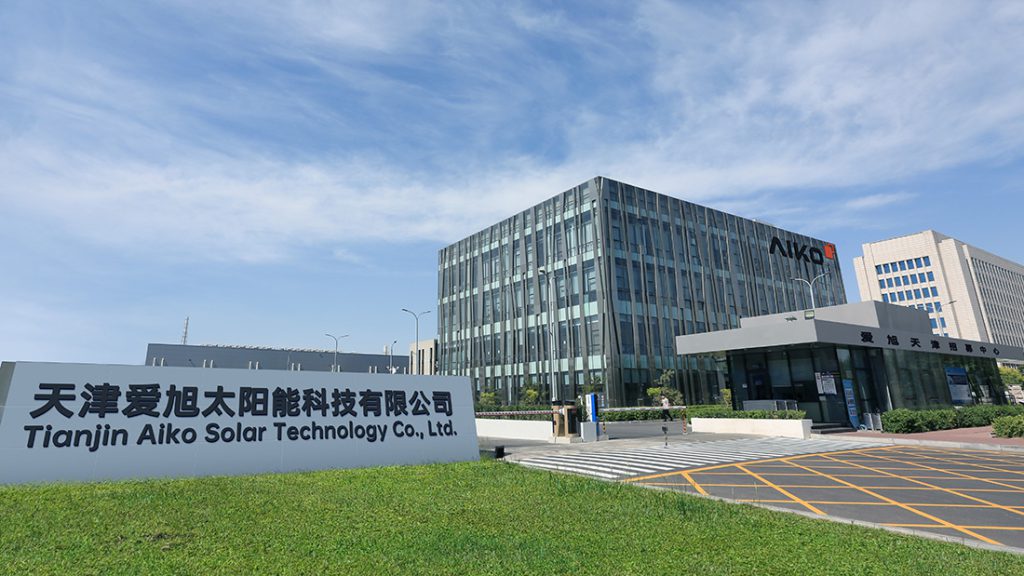
AIKO’s Tianjin Base recently tagged the National Green Factory by China’s Ministry of Industry and Information Technology (MIIT), and Tianjin’s Directory for Low-Carbon (Near-Zero Carbon Emission) Demonstration Enterprises. These accolades affirm AIKO’s exceptional strides in leading the way towards green, low-carbon, and environmentally-friendly practices, marking a significant step forward in the Company’s path of sustainable development.
Motivation for the “Green” Transformation
With the mission of “Empowering Global Energy Transition towards a Carbon-free Society”, AIKO is committed to pursuing ultimate technological innovation and speeding up the process to reach carbon neutrality. Its remarkable efforts in transitioning towards net-zero have been highlighted in local government’s assessments. AIKO surpassed benchmarks set by the Photovoltaic Battery Industry’s Clean Production Evaluation Index System and ranked among the top 5% for managing industrial pollutant emissions. Such exceptional performance earned the Company a place in the MIIT’s “2023 Annual Green Manufacturing List”.
AIKO Tianjin Base’s successful adoption of green, low-carbon practices signifies a breakthrough for AIKO’s sustainable development. It serves as a demonstration for green, low-carbon factories by technological advancement, process enhancements, energy system transitions, and residual energy recycle. The Company dedicates to extend these practices across all factories, fostering further green and low-carbon transformations.
Implementation “Green” Initiatives
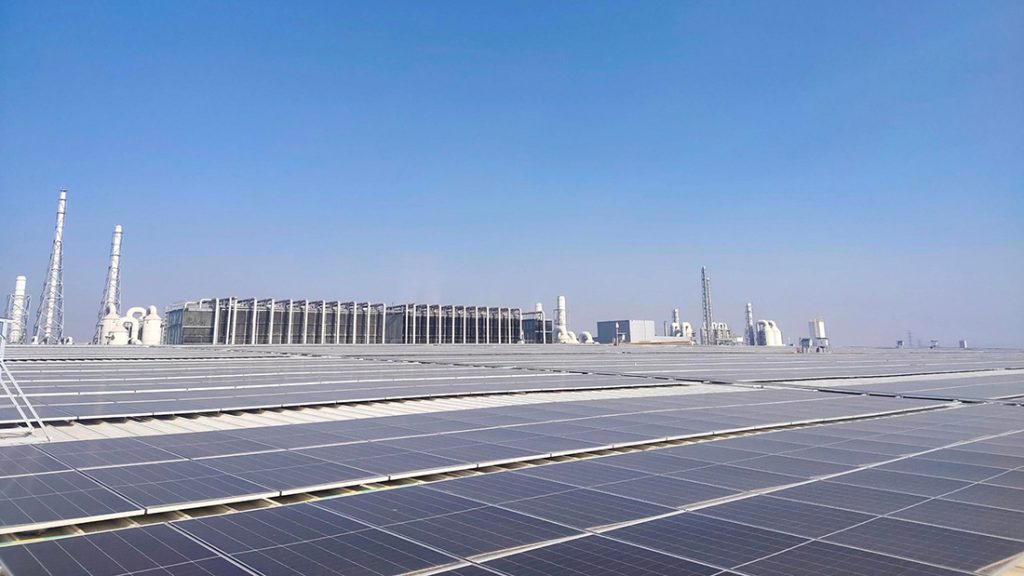
1. Photovoltaic Power Generation and Renewable Energy Use: Installation of distributed photovoltaic power systems on rooftops of factory and parking lots, which could generate approximately 6 million kWh annually, thus reducing carbon emissions by 5300t.
2. Process Optimization and Pollution Control: Adoption of new water treatment processes has ensured that the acid consumption of the cell production process remains below the Level I benchmark of the PV Battery Industry’s Clean Production Evaluation Index System.
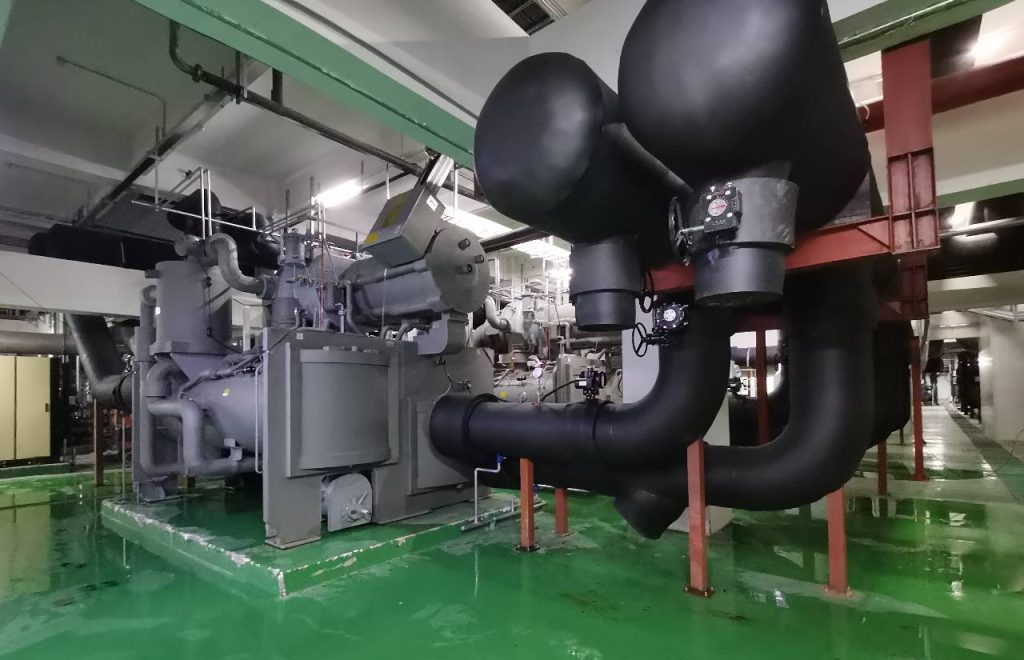
3. Heat Recovery and Enhanced Energy Utilization: Implementation of projects such as “Cooling Water Recirculation Heat Recovery,” “Exhaust Heat Recovery,” “Nitrogen Generator Heat Recovery,” and “Power Recovery” has efficiently utilized residual heat across manufacturing systems with decreasing primary energy consumption.
4. Wastewater Reuse and Efficient Management of Water Resource: The Introduction of the “RO Concentrate Recovery Project” for the pure water system could recycle primary RO concentrate for secondary circulation, enhancing the water yield rate. Additionally, condensate water from the fresh air handling unit is used to reclaim pure water station concentrates to improve water efficiency.
Direction for “Green” Development
1. Resource Conservation and Efficiency: The Company will constantly optimizing the corporate energy management system, upgrading key energy-consuming equipment like motors and transformers, implementing advanced energy-saving technology, and promoting the use of high-efficiency energy-consuming equipment and production systems.
2. Augmenting Low-Carbon Energy: Accelerate the shift from conventional energy to renewable energy with more distributed PV systems and improved fossil fuel combustion efficiency, which is led by the replacement of gas with electricity.
3. Technological Innovations for Low-Carbon Solutions: Uphold advantages of PERC cell technology while introducing measures including electric injection processes and new products with split-side cells to reduce product electricity cost.
4. Development of Low-Carbon Supply Chains: Select low-carbon suppliers, and implement both online and offline supervision to ensure the compliance with green and low-carbon procurement requirements.
5. Promoting Low-Carbon Transportation: Encourage the use of renewable energy-powered logistics vehicles, enhance in-house charging facilities, construct green warehousing, employ smart logistics management, and use eco-friendly packaging materials to boost logistics efficiency.